

Our Assessment Philosophy
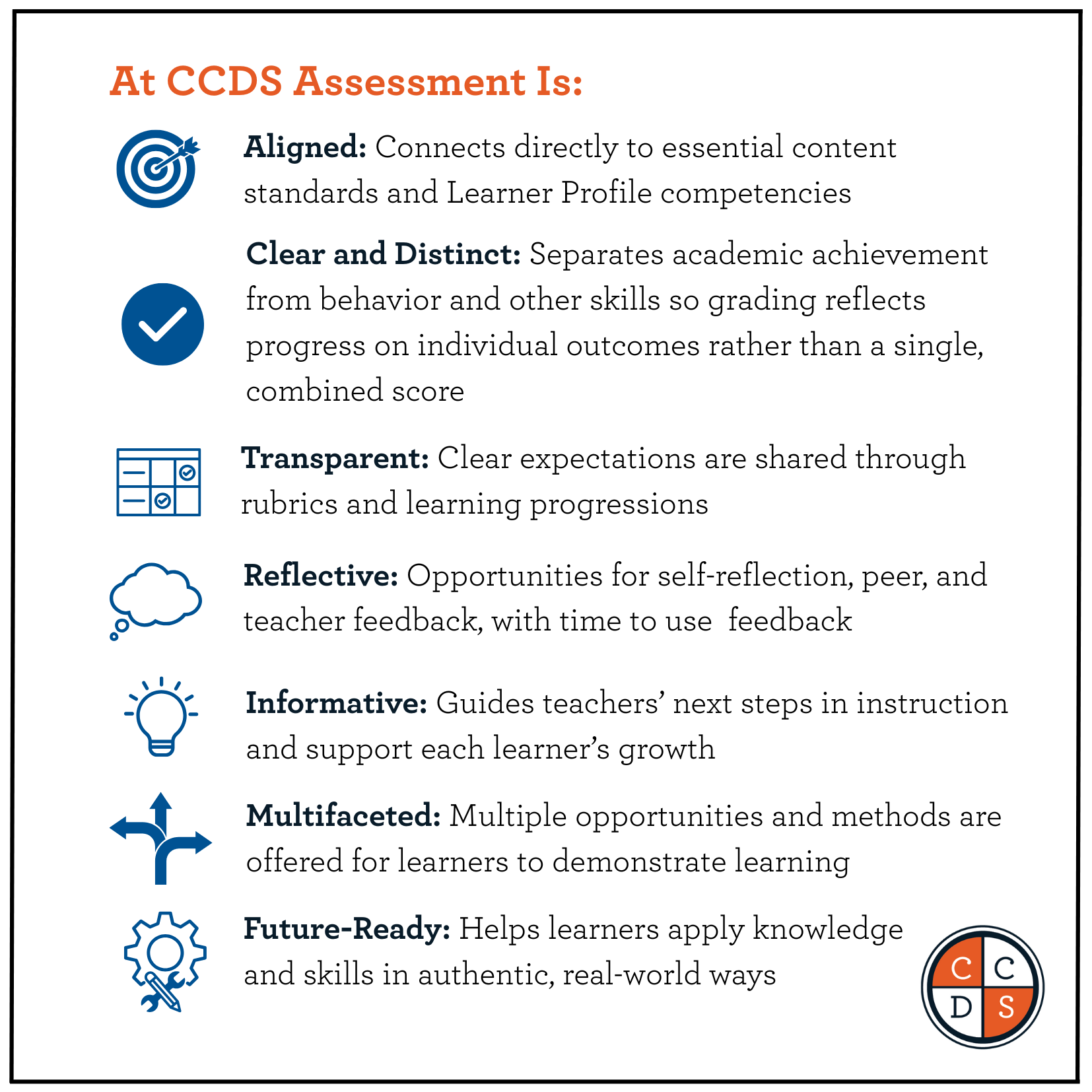
At CCDS, we believe assessment and grading should clearly communicate learning goals and expectations, show where learners are right now, and outline the steps they need to take to reach their next level of growth. Assessment is not a one-and-done judgment, a rigid final score, or a way to compare learners. Instead, it is an ongoing process that supports growth for every learner.
Through assessment, learners:
- Demonstrate what they know and can do in different ways
- Reflect on their progress and set goals
- Receive feedback from themselves, peers, and teachers
- Build ownership of their learning and confidence in their growth
What We Assess
At CCDS, we believe assessment and grading should clearly communicate learning goals and expectations, show where learners are right now, and outline the steps they need to take to reach their next level of growth. Assessment is not a one-and-done judgment, a rigid final score, or a way to compare learners. Instead, it is an ongoing process that supports growth for every learner.
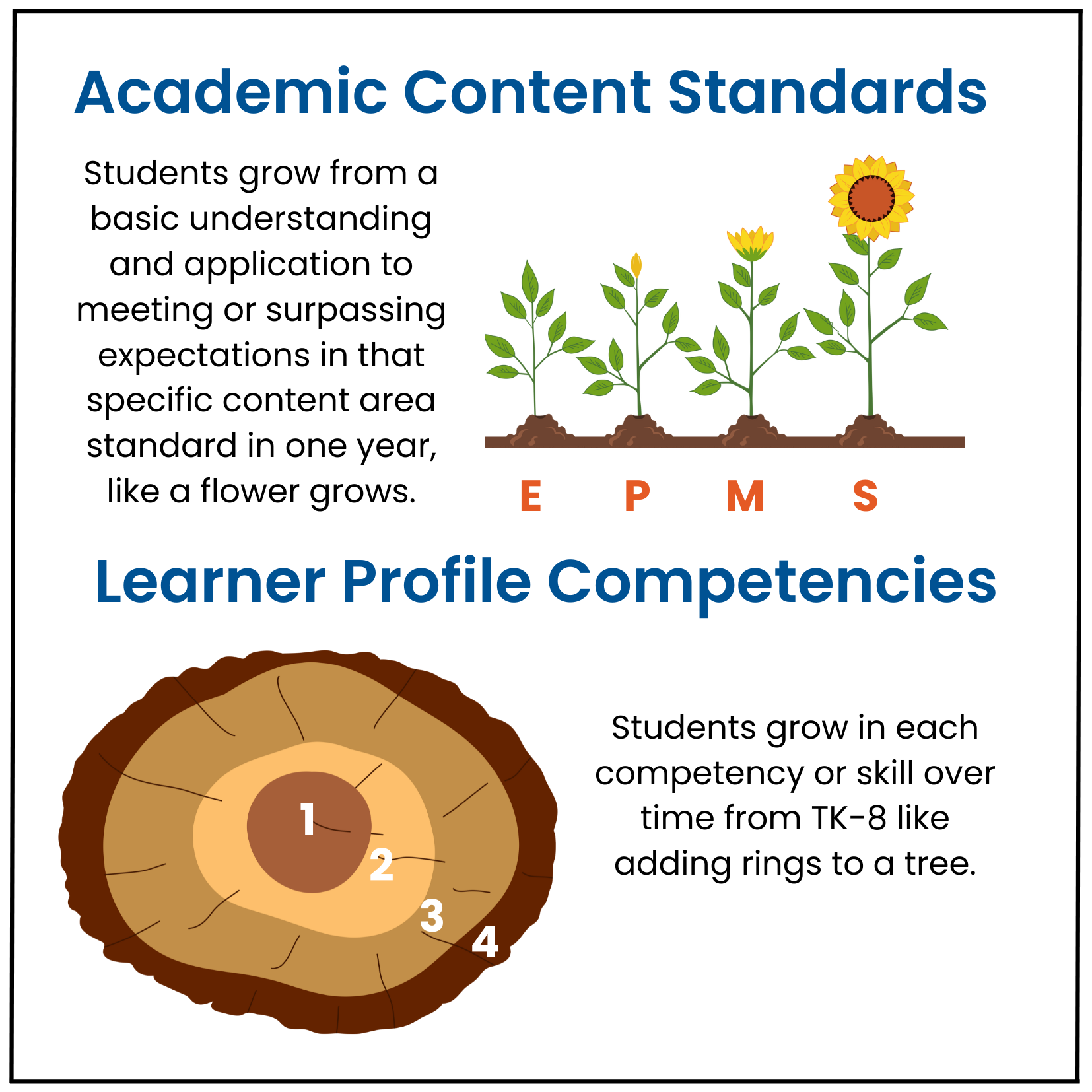
- Essential Standards (Math, ELA, Science & Social Studies): these include the most important content area knowledge and skills learners need to progress to the next grade level. These standards are rated using the EPMS scale: Emerging, Practicing, Meeting, Surpassing.
- Learner Profile Competencies: these are skills we've determined as a school community that each learner needs to be successful, both in school and life beyond school. These competencies are rated on a growth progression throughout the student's time at CCDS. Take a closer look at our Learner Profile.
Personalized Learning Plans
At CCDS, we send home Personalized Learning Plans (PLPs) for each student at regular intervals to show current proficiency in content standards and Learner Profile competencies. PLPs are a snapshot in time, summarizing progress across the year up to that point, not a final judgment. They are intended to support the teacher, learner and family in making informed decisions about next steps to support the learner to grow.